
Public transport · Electric tuk-tuks
Urban Electric Tuk-Tuk Taxi Fleet
Electric three-wheel taxis for city operators and cooperatives: closed and open bodies, 4–6 passengers, LiFePO4 batteries sized for full-day duty.
Overview
Petrol tuk-tuks are being replaced by electric models as fuel prices rise and cities tighten emission rules. For an operator, the win is lower cost per kilometre and fewer breakdowns — if the battery is sized for real taxi duty.
| Passengers | 4–7 |
|---|---|
| Battery | 60V 120Ah / 72V 180Ah LiFePO4 |
| Range per charge | 110–160 km |
| Payload | ≥ 400 kg |
| Approvals available | EEC, DOT (model dependent) |
| 40HQ loading (SKD) | 27–40 units |
The challenge
What the operation needs
Long days of stop-start driving with full loads.
Rain, heat and poor road surfaces.
Drivers need simple daily checks and fast turnaround.
The configuration
How we build the fleet
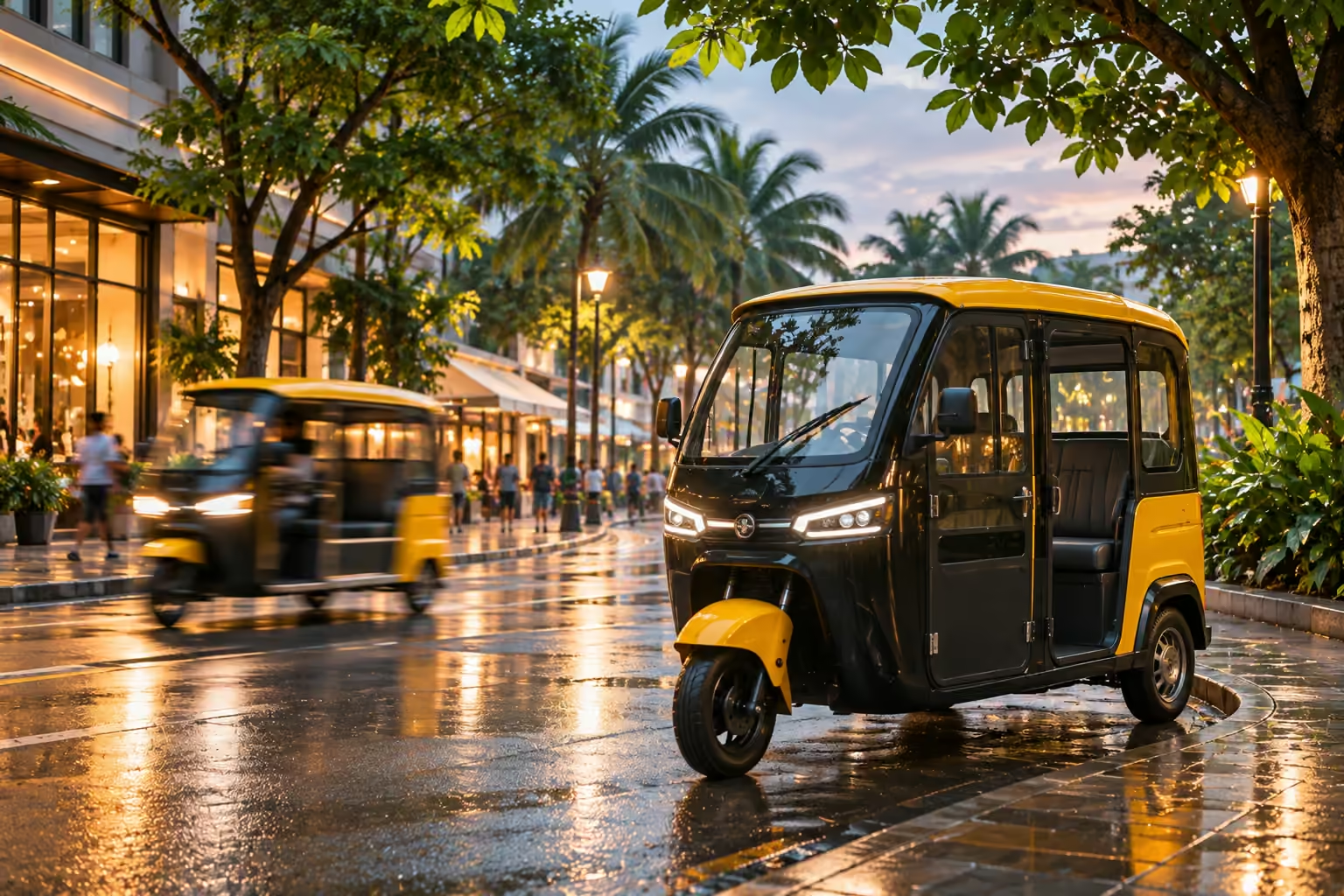
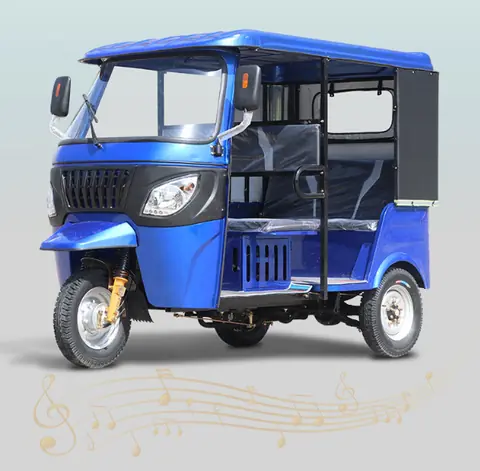
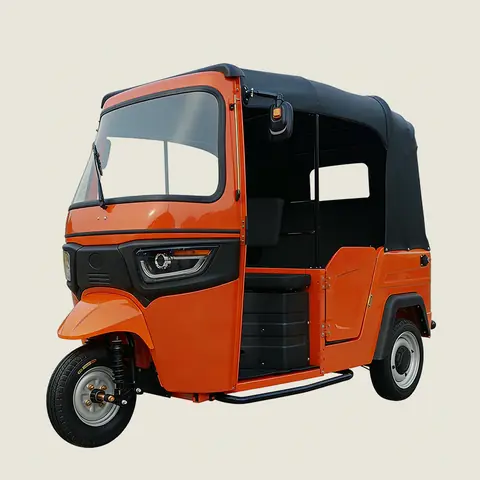
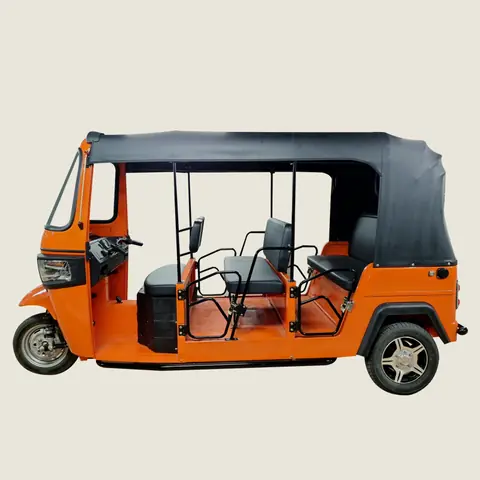
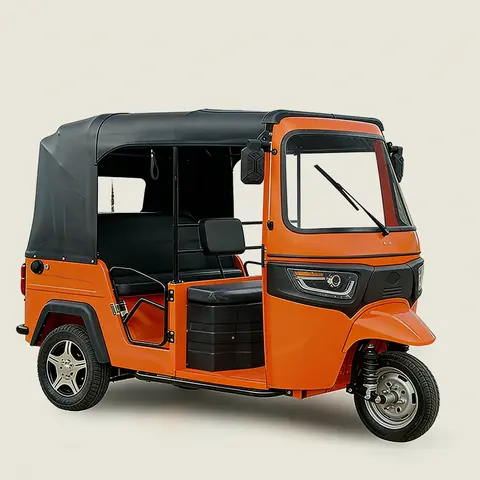
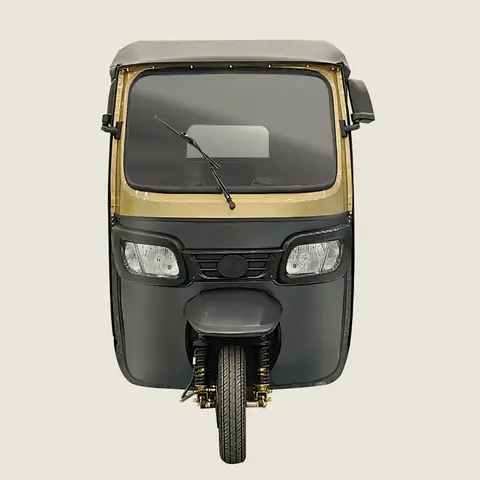
Closed-body 6-passenger taxi for rainy climates; open 4-seat models for hot climates.
LiFePO4 batteries (60V 120Ah or 72V 180Ah) for up to 160 km per charge.
Multiple braking safeguards: front disc, rear drum and hydraulic foot brake.
SKD shipping for high container density and local assembly jobs.
Recommended models
Vehicles in this blueprint
Add models to your quote list, compare them side by side, or ask us to configure the mix for you.
Delivery process
From brief to running fleet
Brief
Tell us the duty: passengers or payload, daily distance, terrain, climate and destination market.
Configure & quote
We recommend models and options and send a quotation with specs, packing plan and lead time.
Sample or video
Approve a sample unit or a live video walk-round of the configuration before mass production.
Production & QC
Your fleet is built, road-tested and inspected; you receive the test report and inspection video.
Ship
CBU, SKD or CKD loading into 40HQ containers with the full export document set.
Assemble & support
Assembly manuals and video guidance, spare-parts kits and remote technical support.
Questions about this project type
Which body is better for taxi use?
Closed bodies protect passengers in rainy climates; open bodies are cooler and lighter in hot, dry climates. Many fleets mix both.
How long does charging take?
Typically 5–7 hours on the standard charger, so most fleets charge overnight.
Scope this project with us
Tell us your site, routes and fleet size; we send a configured proposal.