How to Import Electric Tuk-Tuks from China: A 7-Step Guide for Fleet Buyers
From specification and samples to SKD assembly and registration — a practical checklist for importing electric tuk-tuks for taxi, tourism and rural transport fleets.
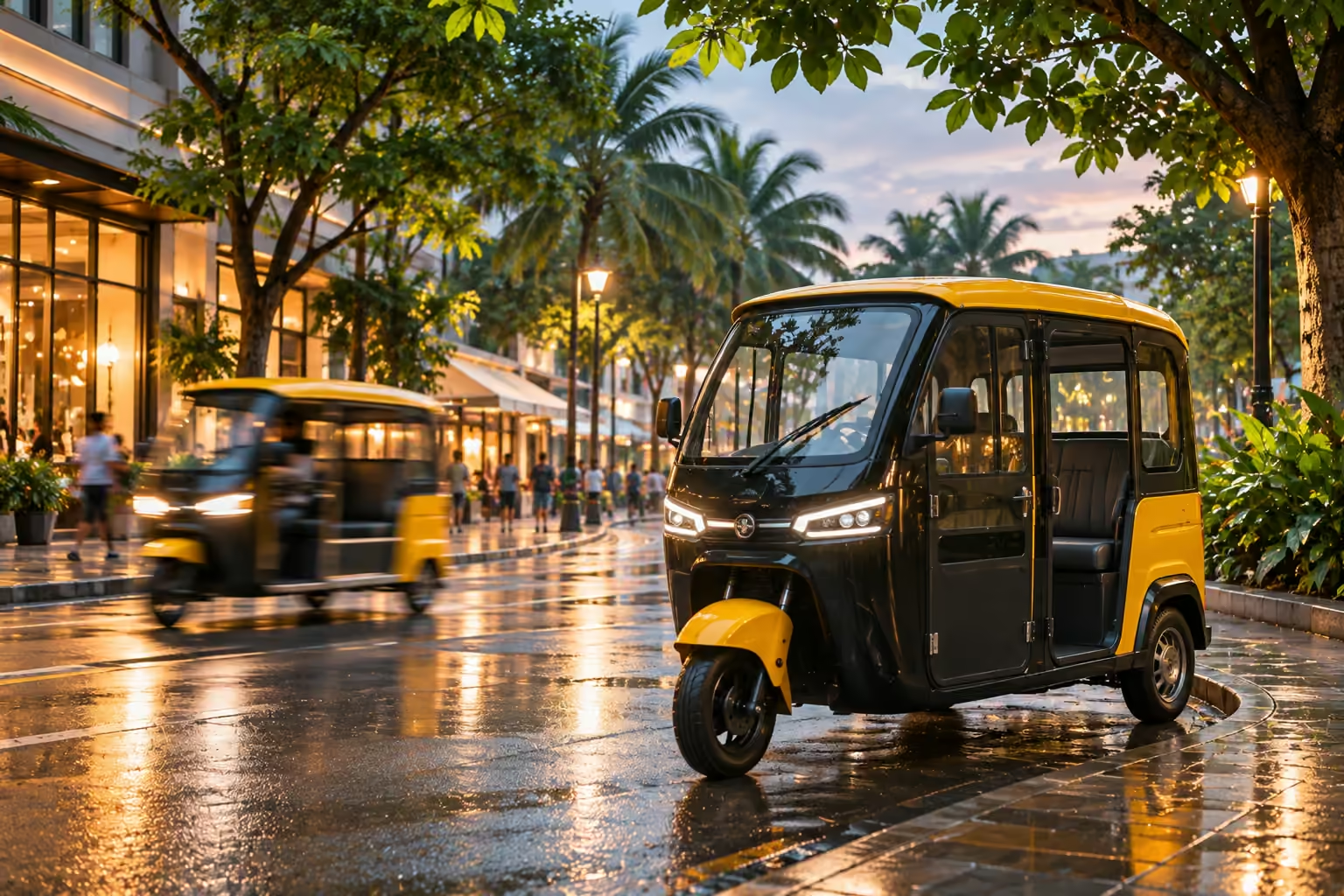
Short answer: To import electric tuk-tuks from China: define the duty (passengers, range, terrain), confirm local homologation rules, request a detailed spec and quotation, approve a sample or video inspection, agree SKD or CBU packing, ship by 40HQ container with full export documents, then assemble, register and train drivers locally.
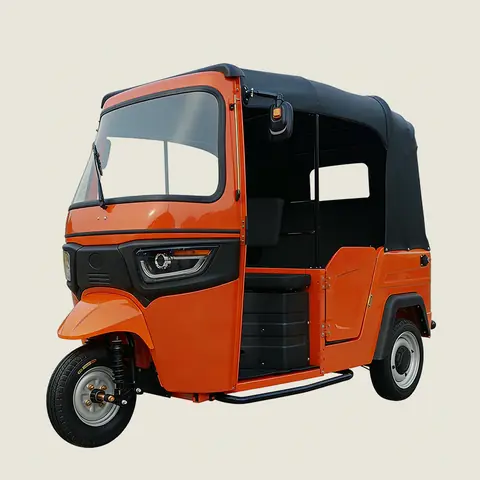
Electric three-wheelers are replacing petrol tuk-tuks in taxi ranks, resorts and villages across Africa, South and Southeast Asia and Latin America. Buying them direct from a factory saves money — if you plan the import properly. These are the seven steps we walk every fleet buyer through.
1. Define the duty cycle
Write down how many passengers, how many kilometres per day, the steepest hill on the route and whether the vehicles will run in heavy rain. These four answers decide motor power (3, 4 or 5 kW), battery size (for example 60V 120Ah or 72V 180Ah), and body type (open, closed or stretched 7-seat).
2. Check local rules first
Some markets require DOT-style lighting, others EEC approval, and many have their own three-wheeler registration rules. Ask your transport authority which documents are needed before you order, and tell your supplier so the build matches.
3. Request a full specification and quotation
A serious quotation lists motor type and rating, controller current, battery chemistry and capacity, brake layout, tyre size, payload and the packing method. Compare like with like — a cheap quote with a smaller battery is not a cheaper vehicle.
4. Inspect a sample or a video
For a first order, buy a sample or ask for a live video inspection of the actual production vehicles: welds, wiring harness routing, brake test, a loaded hill-start and the charger running.
5. Choose SKD or CBU packing
Shipping semi-knocked-down (SKD) fits far more vehicles per container. Our open-body tuk-tuks load around 27 to 40 units per 40HQ in SKD form depending on model, versus a handful fully built. Read our SKD vs CKD vs CBU guide for the trade-offs.
6. Ship with complete documents
- Commercial invoice and packing list (with VIN or frame numbers)
- Bill of lading
- Certificate of origin (Form E, CO or as required by your trade agreement)
- Battery transport documents — lithium packs ship as dangerous goods (UN3480/UN3171) and need an MSDS and UN38.3 test summary
7. Assemble, register and train
SKD assembly needs a covered space, basic tools and a torque wrench; we provide assembly manuals and video support. Train drivers on regenerative braking, charging routines and daily checks — it is the cheapest way to protect your batteries.
Ready to scope a fleet? Browse our electric tuk-tuk range or see the urban taxi fleet blueprint.
Frequently asked questions
How many electric tuk-tuks fit in a 40HQ container?
It depends on the model and packing. In SKD form our open-body tuk-tuks load roughly 27 to 40 units per 40HQ; fully built (CBU) the number is much lower.
Can lithium batteries be shipped by sea?
Yes. Lithium traction batteries ship as Class 9 dangerous goods with an MSDS and UN38.3 test summary, booked with a carrier that accepts DG cargo.
Do you supply spare parts with the order?
We recommend ordering a spare-parts kit (brake pads, bulbs, fuses, controller, charger) with the first container; we quote it alongside the vehicles.
Have a project in mind?
Send us your requirements and get a configured quotation.